News

How to Address TPE Raw Material Caking Issues? A Comprehensive Anti-Caking Guide

2026-03-13 0 Leave me a message

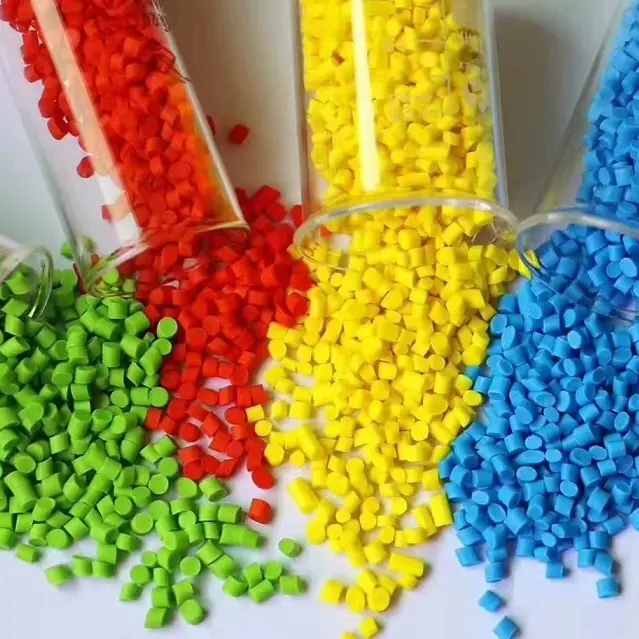
For raw material processors, caking not only complicates automated feeding and causes injection molding machine inlet blockages but also compromises plasticization uniformity, ultimately degrading final product quality. So how can TPE raw material caking be effectively prevented? Zhongsuwang shares insights below.


Part 1: Precisely Control Storage Temperature and Humidity


TPE raw material is highly sensitive to temperature fluctuations, with high heat being a key factor in triggering clumping. To prevent this, storage temperatures should be strictly maintained below 40°C (104°F), keeping the warehouse environment as close to room temperature as possible. Keep raw materials away from heat sources, steam pipes, and direct sunlight, especially during hot summer periods.


Additionally, humidity control is essential. Although TPE has relatively low water absorption, excessive moisture adhering to particle surfaces can form “liquid bridges” under gravity, accelerating particle agglomeration. Maintaining a dry warehouse effectively prevents material caking and property degradation.


Part 2: Optimize Packaging Stacking to Reduce Bottom Pressure


Gravitational compression is a primary physical cause of agglomeration during long-term TPE storage. To minimize this compression, optimize warehouse stacking methods. Avoid stacking pallets excessively high—generally not exceeding safe heights—and adhere to the “first-in, first-out” inventory management principle to reduce raw material storage duration.


For bulk-packaged materials, ensure stable stacking to prevent excessive bottom pressure. Additionally, selecting packaging bags with higher strength and stiffness can partially resist external pressure affecting pellet morphology.


Part 3: Rationally Adding Additives to Enhance Anti-Caking Properties


If clumping persists despite adjusted storage conditions, it indicates insufficient anti-caking properties in the raw material formulation itself. At this stage, functional additives can be incorporated during formulation design.


Additionally, incorporating appropriate amounts of inorganic fillers like calcium carbonate or talc provides physical barrier effects. These fillers increase surface roughness, reducing direct contact between polymer chains.


Part 4: Physical Intervention to Ensure Granule Looseness


For freshly produced TPE raw material or batches showing mild caking tendencies, physical intervention is essential. During the post-processing stage of the pelletizing line, ensure the cooling system operates efficiently. Hot pellets must undergo forced air or water cooling, and packaging should only occur after the core temperature drops to room temperature.


For batches with pronounced caking tendencies, incorporate a vibrating screen separation process before use or packaging. Forced vibration and screening break up small agglomerates, select qualified pellets, and remove elongated strands and dust, ensuring particle flowability and separability.


In summary, by comprehensively implementing the above measures—from storage environment optimization, packaging stacking protocols, formulation adjustments, to physical intervention—the risk of TPE raw material caking can be effectively mitigated, ensuring smooth production operations and stable material performance.

Related News
Leave me a message
在线客服系统
X
We use cookies to offer you a better browsing experience, analyze site traffic and personalize content. By using this site, you agree to our use of cookies. Privacy Policy
Reject Accept