News

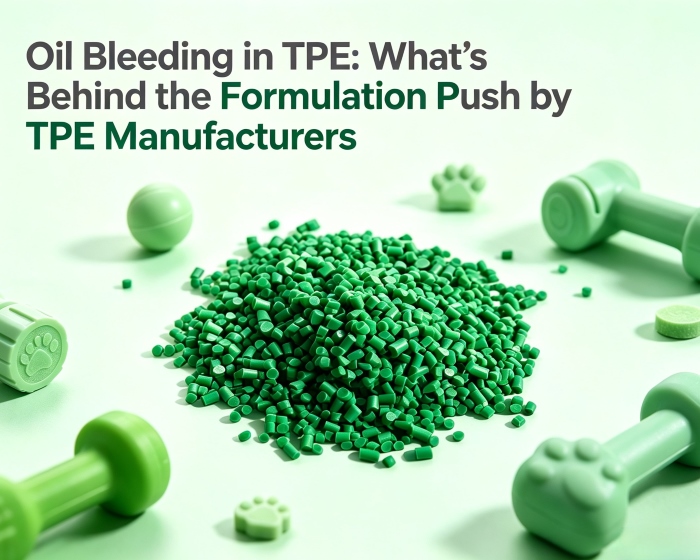
​Oil Bleeding in TPE: What’s Behind the Formulation Push by TPE Manufacturers

2026-07-28 0 Leave me a message

Sticky surfaces on finished products that attract dust—this is a typical scenario reported by assembly lines when injection molding plants encounter “oil bleeding” issues. In fact, oil bleeding is not a failure of the material’s structure, but rather a physical phenomenon caused by the migration of low-molecular-weight components in the TPE formulation to the surface. When such problems arise, experienced TPE manufacturers address them at the formulation level by adjusting the white oil and additive systems to reduce surface migration.


From a technical standpoint, TPE manufacturers continue to optimize this aspect because white oil and certain low-molecular-weight additives exhibit compatibility issues with the base resin. After the product is molded, these low-molecular-weight substances slowly migrate to the surface over time and with temperature changes, forming a sticky, shiny, oily film.

To suppress this migration, formulation optimization typically focuses on two key areas:

First, selecting white oil with a higher degree of refining and a narrower molecular weight distribution to enhance the matrix’s capacity to retain oil. Second, while ensuring processability, using lubricants and release agents with higher molecular weights and better migration resistance to reduce the total amount of migratable components at the source.


For injection molding factories and brand manufacturers, the tangible benefits of a mature TPE manufacturer effectively controlling oil migration are significant. The product surface remains dry and non-sticky, ensuring consistent appearance, and subsequent processes such as printing and bonding will not be compromised by a surface oil film. Over the long term, the material will not become hard and brittle due to continuous oil migration, and the product’s tactile feel and elasticity will be maintained for a longer period. Particularly in sectors with stringent requirements for appearance and tactile feel—such as electronic components, smart wearables, and automotive interiors—a TPE manufacturer’s oil migration control design during the formulation stage will directly impact the end product’s yield rate and customer complaint rate.


Of course, formulation optimization is not a matter of making one-sided trade-offs. While reducing the tendency for oil bleeding, adjustments to hardness and processing flowability may be affected. Therefore, TPE manufacturers with extensive R&D experience do not focus solely on a single metric but instead seek a balance among exudation control, mechanical properties, and the processing window. This is why, even among TPE materials, there are significant differences in surface condition after long-term use depending on the manufacturer.


In summary, when selecting materials, in addition to focusing on conventional physical property parameters, it is also advisable to simultaneously evaluate the supplier’s control standards and actual test data regarding exudation and oil bleeding—this serves as a very intuitive assessment criterion. Zhongsu Wang TPE has established an exudation risk assessment system during the formulation development stage, covering white oil screening, compatibility verification, and aging exudation monitoring, enabling the company to provide customers with proven solutions that ensure controllable oil bleeding and a dry, clean surface.

Related News
Leave me a message
在线客服系统
X
We use cookies to offer you a better browsing experience, analyze site traffic and personalize content. By using this site, you agree to our use of cookies.Privacy Policy
RejectAccept