News

Can Elastic TPE Be Used for Ultra-Soft Foam? A Technical Comparison With EVA

2026-07-25 0 Leave me a message

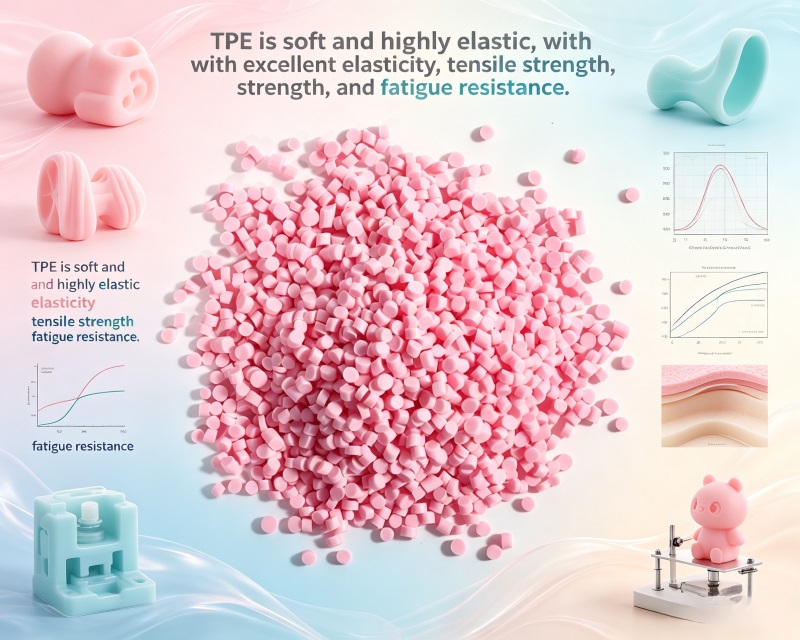
In product categories with high softness requirements—such as yoga mats, shoe materials, and anti-slip mats—ultra-soft foam has long been a popular choice for material selection. In the past, EVA dominated this field, but in recent years, elastic TPE foam has been rapidly gaining ground. This isn’t because it’s cheaper, but because it offers an experience that EVA struggles to match in three key areas: tactile feel, resilience, and environmental friendliness.

Elastomeric TPE is perfectly capable of producing ultra-soft foam, and in many applications, its overall performance is more compelling than that of EVA. When comparing the two, the differences are primarily evident in four areas.

The difference in texture is something users can feel immediately upon touch. EVA foam feels soft and spongy; when pressed, it rebounds rather slowly, giving a sluggish, laggy sensation. Elastomeric TPE foam feels closer to natural rubber—soft yet resilient. It springs back immediately upon pressure, providing a distinct sense of support. It resists sagging even with prolonged use and won’t develop permanent indentations from extended use. For products like yoga mats and exercise mats that require both softness and support, this firm yet responsive feel is a tangible advantage.

The environmental benefits of recyclability are also very practical. EVA foam has a cross-linked structure, so recycling scrap requires specialized equipment—something many factories lack—forcing them to dispose of it as waste. Elastic TPE foam, however, is a thermoplastic material; production by-products like sprues and scrap can be directly recycled into pellets and reintroduced into the production process. This alone helps factories significantly reduce hidden costs, a factor that overseas customers particularly value.

Performance in weather resistance and odor control is equally noteworthy. Light-colored EVA foam products are prone to yellowing under UV exposure and become noticeably stiff in low-temperature environments. Through formulation adjustments, elastic TPE foam can achieve a very high level of yellowing resistance and remain soft and elastic even at temperatures in the low teens below zero, making it more suitable for outdoor use and cold regions. Regarding odor, the cross-linking agents and foaming aids used in the EVA foaming process tend to leave residual odors that take a long time to dissipate. Elastic TPE foaming does not require cross-linking, and the entire formulation system can be designed to be low-odor; the finished product is virtually free of pungent chemical odors, a feature that is highly sought after in indoor products and maternal and infant categories.

Of course, the EVA foaming process is well-established and still holds its own in markets where high volume and low cost are prioritized. However, as product positioning shifts toward better tactile feel, cleaner recycling, and broader application environments, the advantages of elastic TPE foaming will gradually become apparent.

In summary, the choice between these two materials essentially comes down to whether the brand prefers to prioritize cost or focus on user experience and regulatory compliance. Zhongsu Wang offers mature formulation solutions in the ultra-soft TPE sector and can provide tailored development based on product thickness, expansion ratio, and tactile requirements, helping customers strike the right balance between cost and performance.


Related News
Leave me a message
在线客服系统
X
We use cookies to offer you a better browsing experience, analyze site traffic and personalize content. By using this site, you agree to our use of cookies.Privacy Policy
RejectAccept