News

Can Conductive Grade TPR be overmolded with PP or ABS materials?

2025-12-18

In the field of rubber-plastic composite processing, Conductive Grade TPR with conductive properties and elasticity advantages, often need to be used in combination with PP, ABS and other hard plastics, a lot of practitioners will be confused about whether the two can achieve stable overmolding. Then Zhongsu Wang will be the next editor to answer for you.


In fact, Conductive Grade TPR and PP, ABS overmolding is completely feasible, but depends on the material compatibility optimization and process parameter matching. Why do you say so? Take a look.


First, how about its suitability for overmolding with PP materials?


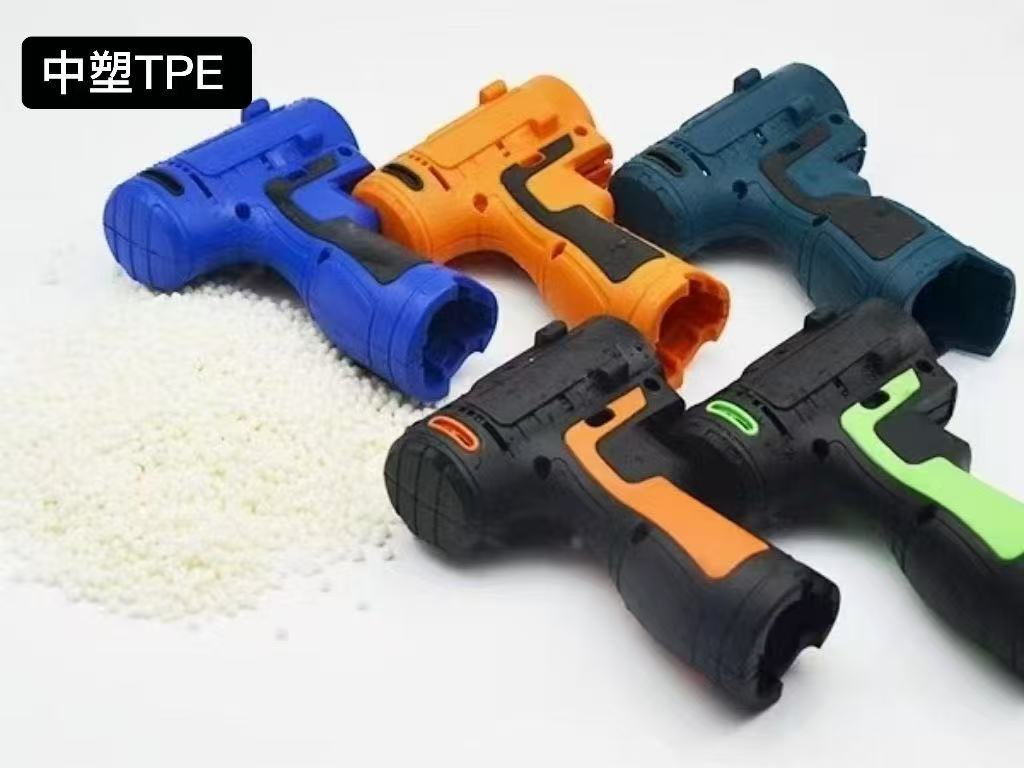
PP is a weak polar material, with SEBS as the base material of conductive TPR polarity is similar, compatibility is good, without the need to add additional polar modifiers to achieve the basic bonding. When overmolding, it is necessary to control the injection temperature in a reasonable range to ensure that the TPR melt fluidity is sufficient, and at the same time, the PP surface to form a thin molten layer, to promote the molecular chain diffusion of each other entangled, to enhance the bonding strength. This combination is suitable for power tool handles, electronic equipment shells and other scenarios, which can take into account the conductive protection and grip feel.


Second, what are the key points of adhesive overmolding with ABS material?


ABS is a neutral polarity material, and conductive TPR there is a certain polarity difference, direct adhesive bonding is weak. Need to add modifiers in the TPR formula to optimize the polarity, narrow the compatibility gap with ABS, while improving the secondary injection temperature, enhance the interface molecular interaction. Through the mold design optimization, such as increasing the microporous structure or mechanical interlocking design, can further enhance the anti-peel performance, applicable to the need for conductive sealing of home appliance accessories, electronic components shell and other scenarios.


Third, the core considerations of overmolding, to share with you


Need to choose the appropriate conductive TPR formula to ensure that the conductive filler does not affect the melt fluidity and interface bonding effect. Baking material before processing, to avoid water vapor causing defects in the interface. Control the mold temperature and cooling rate to reduce the internal stress caused by the difference in shrinkage of the two materials. At the same time to ensure that the mold exhaust smooth, to prevent the interface residual gas affect the bonding quality and conductive stability.


Conductive Grade TPR and PP, ABS overmolding with practical, PP combination of better compatibility and process simplicity, ABS combination of formula modification and process optimization to achieve stable bonding.


In short, the core of the two is to match the polarity of the material and control the processing parameters, you can take into account the conductive properties and composite strength, to meet the needs of multi-scene applications. We hope the above sharing by Zhongsu Wang can help you.

Related News
在线客服系统
X
We use cookies to offer you a better browsing experience, analyze site traffic and personalize content. By using this site, you agree to our use of cookies. Privacy Policy
Reject Accept