News

Why Does Temperature Resistance Vary Across TPE Grades?

2026-09-29 0 Leave me a message

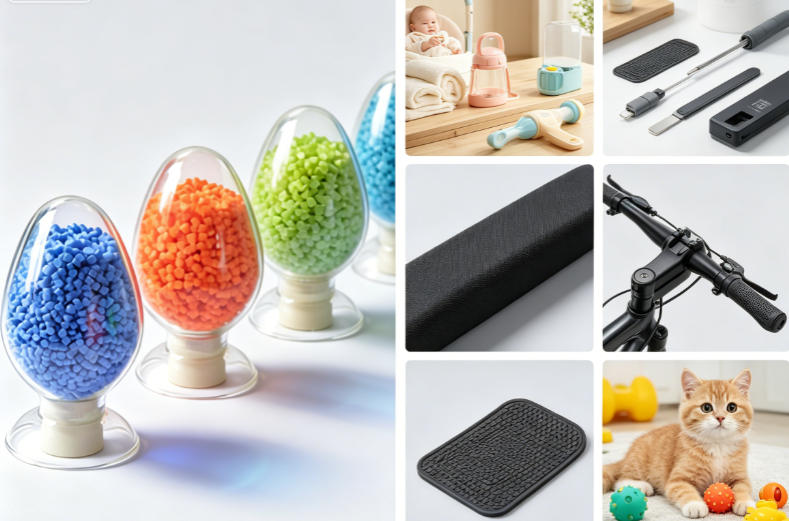
TPE granules combine the elasticity of rubber with the processing convenience of plastics. They are used across a range of industries. As a thermoplastic material, TPE is relatively sensitive to temperature. Its temperature resistance is not a fixed value but rather a comprehensive indicator determined by its chemical structure, formulation, processing methods, and operating environment. Understanding these influencing factors helps make more appropriate decisions during the material selection and process design stages.


How Do the Base Material and Formulation Determine the Upper Temperature Limit?

The temperature resistance of TPE granules depends mainly on the chemical structure of the base polymer. TPE granules based on SBS contain unsaturated butadiene segments in their molecular chains, which are prone to double-bond cleavage at temperatures above 80°C, leading to material softening or degradation. Hydrogenated SEBS, on the other hand, has a high degree of molecular chain saturation and stronger resistance to thermal oxidation, allowing its upper temperature limit to be raised to over 100°C. For applications requiring even higher temperature resistance, specialty materials such as TPV, TPEE, or TPAE can withstand long-term operating temperatures of up to 130°C or even over 150°C.


In addition to the base material type, hardness also affects temperature resistance. Higher-hardness TPE granules contain more rigid segments and are less prone to softening or deformation at high temperatures. However, mineral oils added to impart flexibility, particularly short-chain oils, tend to volatilize or degrade at temperatures above 70°C, causing the material to gradually become soft and brittle. Therefore, the selection of the base material and the quality of the plasticizing oil are the two fundamental factors determining temperature resistance.


How Does the Additive System Affect the Rate of Thermal Aging?

With the base material selected, the additive system also has a direct impact on the temperature resistance of TPE granules. The combination of hindered phenol primary antioxidants and phosphite secondary antioxidants can capture free radicals generated at high temperatures, thereby delaying the oxidative degradation of molecular chains. For chlorinated or hydrolyzable TPE granules, the addition of metal soaps or organic tin heat stabilizers can suppress thermal decomposition during processing and use. The incorporation of heat-resistant fillers such as carbon black, nano-zinc oxide, or nano-montmorillonite can physically block heat from penetrating into the material while absorbing ultraviolet radiation, thereby reducing the rate of photo-thermal synergistic aging.


How do processing methods affect heat resistance?

Poor control during processing can further reduce the temperature resistance of TPE granules. If the barrel temperature is too high during injection molding or extrusion, or if the material is exposed to high temperatures for too long, the polymer may degrade prematurely, resulting in a decrease in molecular weight and a corresponding reduction in the product's heat resistance. Excessively high injection speeds generate significant shear forces, leading to localized overheating and molecular chain breakage. If the cooling cycle is too short, residual stress remains within the finished product, making it prone to deformation when subsequently exposed to heat. Annealing the molded TPE granules helps release residual stress, allows for a more orderly arrangement of molecular chains, and improves thermal stability.


How Does the Operating Environment Determine the Actual Temperature Limits?

The temperature resistance of TPE granules in actual use is also influenced by operating conditions. Intermittent exposure to high temperatures and continuous exposure to high temperatures present different challenges to the material. If TPE granules are subjected to mechanical stresses such as tension or compression while at high temperatures, the risk of deformation or cracking increases. Prolonged exposure to oxygen, ultraviolet (UV) radiation, or certain chemicals can also accelerate aging. UV radiation can break molecular chains, while oxygen can oxidize unsaturated bonds, potentially causing the material to become brittle or lose its elasticity. Therefore, when evaluating temperature resistance, it is necessary to consider the temperature, duration, stress, and environmental conditions present in the actual operating environment.


Conclusion

The temperature resistance of TPE granules is the result of the combined effects of the base material, formulation, processing methods, and operating environment.


When selecting materials, one should not rely solely on a single temperature resistance value. Instead, it is essential to consider the specific temperature requirements and operating conditions of the product. This means verifying each aspect, from base material selection and additive combinations to processing parameters, based on the actual application. Zhongsu Wang TPE has years of formulation expertise in elastomer modification and can provide solutions for applications requiring different temperature resistance levels, helping customers clearly align temperature resistance performance with actual operating conditions during the product selection phase.


Related News
Leave me a message
在线客服系统
X
We use cookies to offer you a better browsing experience, analyze site traffic and personalize content. By using this site, you agree to our use of cookies. Privacy Policy
RejectAccept