News

TPE Material Manufacturer Selection Guide: From Base Material to Supply

2026-11-06 0 Leave me a message

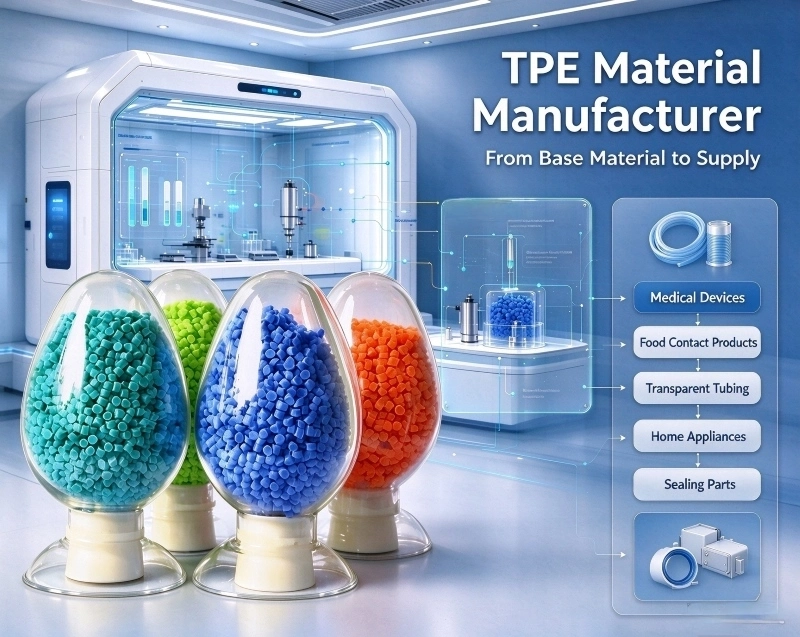
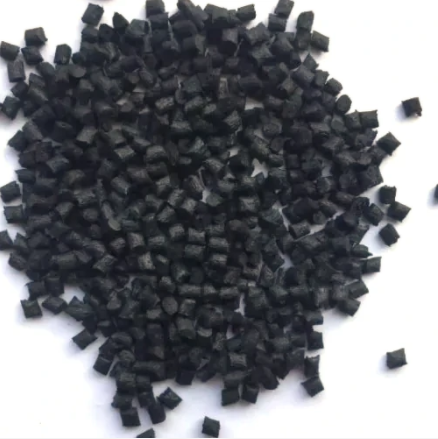
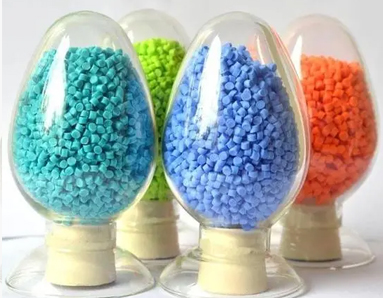
TPE materials are not a single, universal material, but rather a family represented by SEBS-based TPE-S, TPV, TPU, and TPEE. Issues such as delamination in overmolding, softening at high temperatures, and migration in food-contact parts are often not caused by price, but by a mismatch between the base material system and the operating conditions. The selection process requires a step-by-step approach, progressively narrowing down the options along the sequence: "Base Material—Operating Conditions—Overmolding—Compliance—Supply." When selecting a TPE material manufacturer, it is important to clarify this point first.


The Base Material System Is the Starting Point

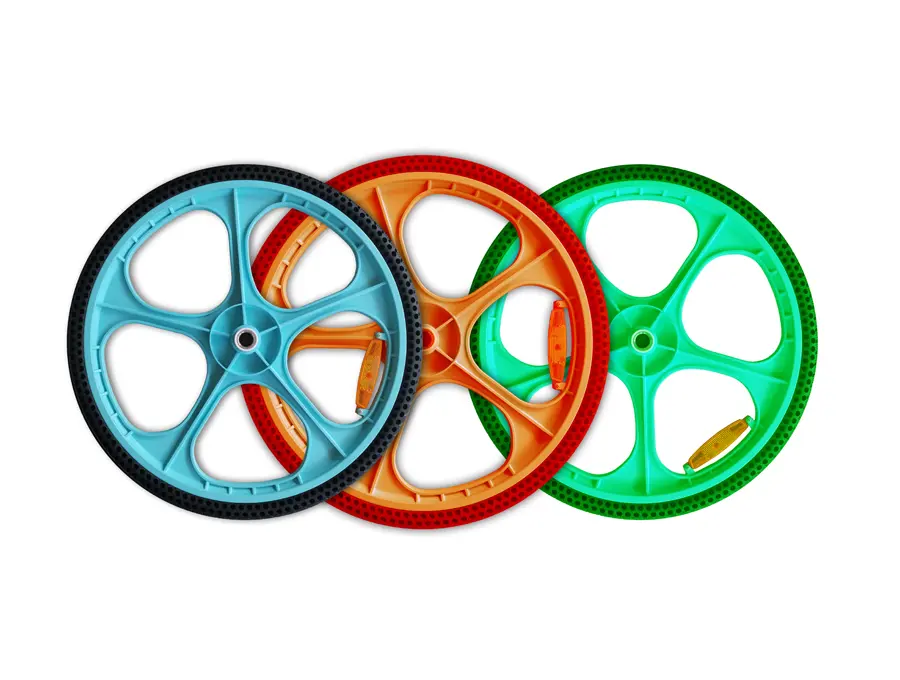
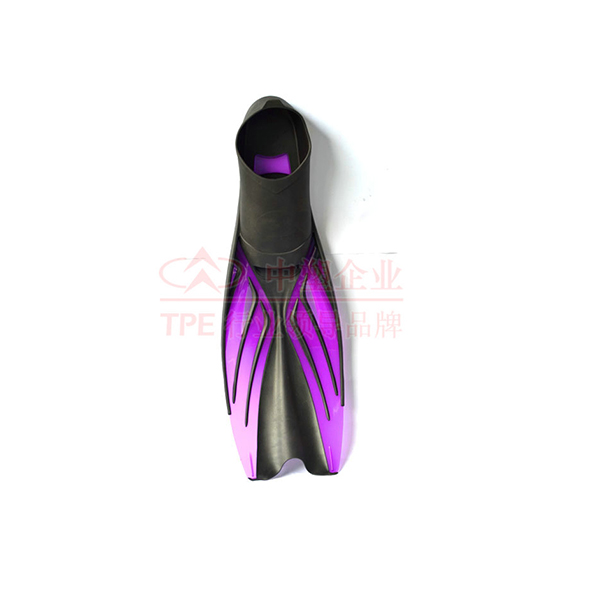
SEBS/SBS-based TPE-S offers a smooth texture, is easy to color-match, and has good adhesion to PP/PE. It is suitable for consumer electronics grips, daily necessities, and food-contact parts, but its temperature resistance is typically limited to around 80°C. TPU offers good abrasion resistance and tensile strength. Oil- and hydrolysis-resistant grades can be used for casters, cable sheaths, and tool housings, but require strict drying and tend to feel somewhat stiff. TPV offers strong weather resistance and compression resistance, with a continuous operating temperature of up to 135°C. It is commonly used in automotive seals and outdoor weather-resistant components. TPEE and PEBA are used in robot joints, transmission components, and high-end sports equipment. Experienced TPE material manufacturers will first help customers determine the base material system before discussing specific grades.


Translate Operating Conditions into Performance Metrics

When the long-term operating temperature exceeds 80°C, standard SEBS-based formulations should be excluded in favor of TPV or TPU. For low-temperature applications, impact resistance and embrittlement behavior at -40°C must be verified. In environments involving contact with engine oil, fuel, or cleaning agents, standard styrene-based elastomers are generally unsuitable. TPU or TPV should be used instead. For sealing structures subjected to repeated compression, compression set is a key metric. Standard TPE-S typically exceeds 40%, while TPV can be reduced to around 20%. For outdoor applications, the UV stabilizer system and hydrolysis resistance rating must also be confirmed. A direct way to gauge a TPE material manufacturer's expertise is to assess whether they can translate the usage environment into specific conditions such as temperature, media, and stress.


Overmolding Compatibility Is Often Underestimated

In delamination during secondary injection molding, the primary cause is rarely the injection molding parameters but rather the material compatibility. PP and PE can form physical wetting bonds with conventional SEBS-based TPEs. ABS and PC are highly polar and require maleic anhydride-grafted SEBS or TPU blends. PA6/PA66 are even more polar and must be paired with specialized polar-modified TPEs or polyether-based TPUs. POM generally cannot form a chemical bond. Excessive oil loading can lead to the migration of small molecules, resulting in stickiness and oil bleeding. Acceptance criteria should at least include a peel test showing cohesive failure of the TPE, as well as the absence of delamination under thermal shock cycling. Ensuring that the TPE material manufacturer's formulation is compatible with the substrate is a more critical preliminary step than adjusting injection molding parameters.


Compliance and Supply Verification

Food-contact components must comply with FDA 21 CFR 177.2600, LFGB, or the GB 4806 series. Toys and children's products must meet EN 71-3, REACH SVHC, and phthalate limits. For electronic cables, compliance with UL 94 V-0 and UL 1581 VW-1 is essential. Medical applications further require ISO 10993 or USP Class VI. In the automotive supply chain, assess whether the factory operates an IATF 16949 system and meets specific requirements such as VOC, fogging, and ELV standards. Whether compliance documentation lists the factory itself as the submitter is a useful indicator of a TPE material manufacturer's professionalism.


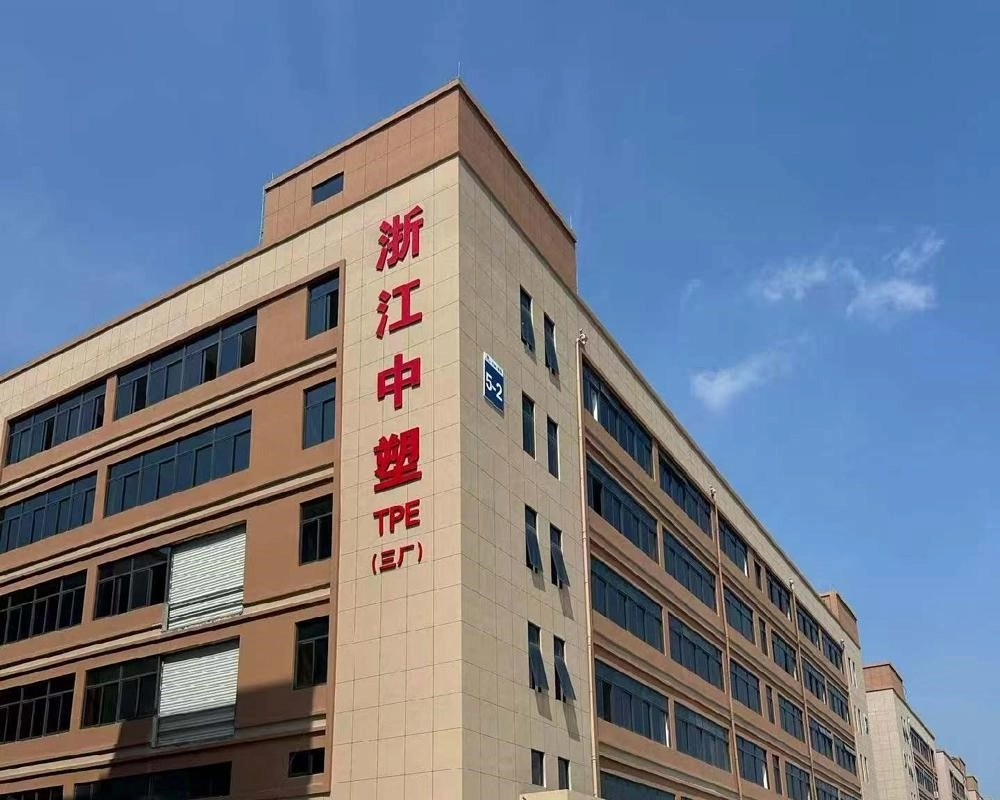
When evaluating TPE material manufacturers, several specific dimensions can be considered. Do they have production capacity across multiple sites? Are the number of twin-screw production lines and annual production capacity transparent? Do they operate systems such as ISO 9001 and IATF 16949? Can they provide complete compliance documentation for FDA/LFGB, UL 94, REACH/RoHS, and other standards? Do they offer free samples and mold trial support? Taking Zhongsu Wang TPE as an example, the company was founded in 2003 and has established a multi-site layout across Shenzhen, Jiangmen, Huizhou, and Zhejiang. Equipped with 24 twin-screw production lines and an annual production capacity of nearly 30,000 metric tons, it serves as a reference point for comparison.


Summary

The selection of TPE materials should ultimately follow a set of actionable verification criteria. First, narrow down the base material system based on temperature, medium, and stress patterns. Next, determine the overmolding formulation approach based on the type of hard plastic. Then, identify the required certification list according to the end market. Finally, evaluate suppliers based on their production capacity, testing capabilities, and response time for sample production. A mature selection process is not simply about choosing a "soft material," but rather selecting an engineering solution that is expected to resist delamination, yellowing, and oil migration over an extended service period, and whose certifications remain verifiable.


Related News
Leave me a message
在线客服系统
X
We use cookies to offer you a better browsing experience, analyze site traffic and personalize content. By using this site, you agree to our use of cookies. Privacy Policy
RejectAccept