News

How to Select TPE Raw Materials by Density for Different Application Scenarios?

2026-10-26 0 Leave me a message

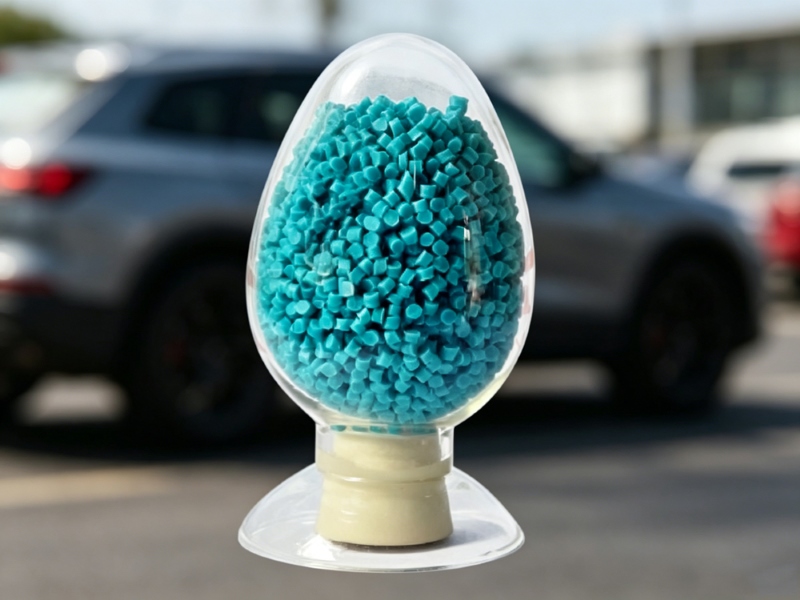
Density is an easily overlooked parameter in TPE raw materials, ranging from 0.3 g/cm³ in foamed grades to 2.0 g/cm³ in highly filled grades. It affects product weight, material cost, elasticity, tensile strength, and wear resistance. Understanding which density range fits which application helps narrow down material selection.


What Determines Density?

Density depends mainly on the base material and filler content. Unfilled SEBS-based TPE raw materials typically range from 0.92 to 0.98 g/cm³, offering good elasticity and tensile strength at a higher cost. Adding fillers such as calcium carbonate or talc raises density to 1.1–2.0 g/cm³, but elasticity, tensile strength, and wear resistance decrease as filler content increases. Foamed TPE raw materials use a microcellular structure to bring density down to 0.3–0.9 g/cm³, reducing weight but also lowering mechanical strength.


Low Density: 0.3–0.9 g/cm³

This range is achieved mainly through foaming and is used for lightweighting and cushioning. Foamed TPE raw materials for EV battery pack seals can reach 0.2–0.4 g/cm³ while meeting IP67–IP68 requirements. Sports shoe midsoles at around 0.85–0.95 g/cm³ reduce weight by over 25% compared with traditional rubber and provide energy return and cushioning. Low-density foamed TPE raw materials are also used in VR headset and headphone ear cushions. Mechanical strength is lower in this range, so these materials suit non-load-bearing sealing and cushioning parts.


Medium-Low Density: 0.9–1.05 g/cm³

This range balances lightweighting and mechanical performance and covers a wide scope of applications. Automotive bumper trim, side skirts, and wheel arches at 0.95–1.05 g/cm³ reduce weight by 10–15% versus EPDM rubber while maintaining impact and weather resistance. Instrument panel skins and door armrests at around 0.90–1.0 g/cm³ balance weight and cost. TPV weatherseals at 0.95–1.05 g/cm³ offer good weathering resistance. Phone cases and earphone cable jackets at 0.92–1.0 g/cm³ combine grip and lightweight design. TPE raw materials in this range usually require no extra filler and offer good elasticity and tensile strength.


Medium-High Density: 1.05–1.3 g/cm³

Formulations in this range typically include functional fillers. Industrial seals at 1.1–1.2 g/cm³ use mineral fillers to improve rigidity and pressure resistance. Industrial caster overmolding at 1.1–1.25 g/cm³ gains abrasion resistance through high filler loading. Tool handles at 1.05–1.2 g/cm³ feel more solid and offer better grip. Flame-retardant TPE raw materials for charging station cable jackets at 1.05–1.2 g/cm³ must withstand repeated bending and dragging. Filler modification reduces elasticity but improves rigidity, abrasion resistance, and dimensional stability.


High Density: 1.3–2.0 g/cm³

This range is achieved through high filler loading. Eraser products can reach 2.0 g/cm³, where high filler content provides the hardness and friction needed for erasing. Counterweights and damping blocks use high-density TPE raw materials to combine elasticity with weight. Low-cost, high-volume products also fall into this range, since higher filler content lowers cost per unit volume. Elasticity and tensile strength drop noticeably here, so these materials suit applications where elasticity is not critical.


TPE raw material density selection is essentially about balancing lightweighting, mechanical performance, functional requirements, and cost. Zhongsu Wang TPE can provide formulations for specific density ranges and performance targets, with support for sample validation and production scaling.


Related News
Leave me a message
在线客服系统
X
We use cookies to offer you a better browsing experience, analyze site traffic and personalize content. By using this site, you agree to our use of cookies. Privacy Policy
RejectAccept