News

How to Match TPE Material Hardness and Oil Content for Different Applications?

2026-10-13 0 Leave me a message

When customizing TPE materials, one trade-off is hard to avoid. To achieve a softer feel, more oil must be added. However, the more oil added, the harder it becomes to maintain strength, resilience, and long-term stability. Many projects run into problems not because of poor formulation, but because the target hardness was not properly matched to the oil content from the outset.


What is the relationship between oil content and hardness?

In SEBS-based TPE materials, oil content is the primary factor affecting hardness. SEBS itself has a porous structure that can absorb large amounts of white oil. The general correlation is that when the SEBS-to-white-oil ratio is around 1:2, the modified material's hardness is approximately 10A. When the ratio reaches 1:3 or higher, the hardness approaches 0A.

For ultra-soft materials ranging from Shore A0 to A10, the oil content ratio will be relatively high, and the formulation must also account for oil retention and strength compensation. If the target hardness is 50A or higher, the oil content should be kept relatively low, which helps better preserve the inherent strength of the TPE material.


How should this be adjusted for different applications?

For grip-oriented and soft-touch applications, hardness typically ranges from 30A to 60A. These applications require good rebound and a dry surface feel, so oil content should be kept at a moderate level. Excessive oil content can lead to poor rebound and a sticky surface. Within this range, hardness can be fine-tuned by adjusting the PP content or fillers, without relying on high oil content.

For ultra-soft applications such as gel pads, orthopedic devices, and skin-like touch components, the target hardness ranges from A0 to A20 or even softer. Formulations for these applications require high oil content, but tensile strength tends to drop, possibly to only 0.1 to 0.5 MPa. When customizing, do not focus solely on hardness. It is also important to evaluate whether the TPE material can withstand tensile and tear forces during use at the finished product's thickness.

For applications requiring oil resistance or abrasion resistance, oil content must be managed with greater caution. Oil reduces the material's resistance to grease, and the higher the oil content, the greater the risk of swelling when exposed to oil. In such cases, a higher-molecular-weight SEBS base material is a better fit, using a limited oil content to balance hardness and strength.


What are some common pitfalls to avoid during customization?

First, specifying only the hardness target without addressing rebound and strength requirements. Even materials with the same nominal hardness rating, such as A30, may exhibit different rebound and tear resistance performance depending on their oil content and base material molecular weight. When customizing, it is best to clearly describe the stress patterns encountered during use.

Second, ignoring the upper limit for oil content. It is generally recommended that oil content not exceed 70% of the base material's weight. Exceeding this limit increases the risk of oil migration. Over-oil-filled TPE materials may feel acceptable initially, but after some time, they may develop a sticky surface or experience dimensional shrinkage.

Third, failing to verify oil retention after oil loading. Formulations with high oil loading require high-molecular-weight base materials and appropriate oil-retention components. After prototyping, it is recommended to conduct accelerated aging tests to confirm that no oil is leaching out.

Matching hardness with oil loading is essentially about finding a balance between flexibility, strength, and stability. Before placing a custom order, it is more practical to translate application requirements into specific hardness ranges and minimum physical property thresholds, and then have the TPE supplier provide a corresponding oil-filling solution, rather than simply requesting a specific hardness value.


About us

Zhongsu Wang TPE has years of formulation expertise in elastomer modification and can provide solutions for specific applications, assisting with sample validation and long-term stability assessments.

Q: Can I get free samples for mold testing?

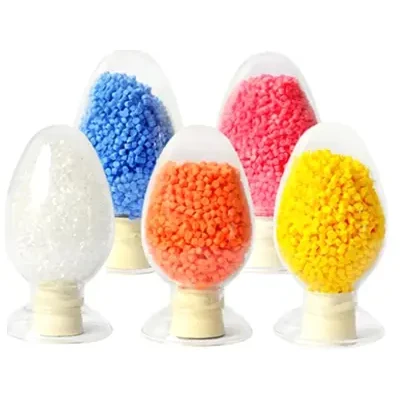
A: Free samples are available for mold trials. Custom color and performance adjustment are supported.

Q: Does this TPE comply with environmental regulations?

A: Our TPE materials meet RoHS and REACH standards. They are halogen-free, odorless and plasticizer-free, suitable for toys, daily necessities and food-contact products.

Q: What is your lead time for bulk orders?

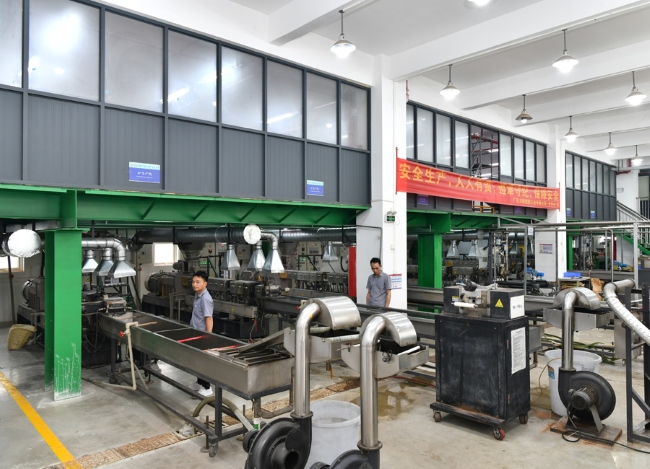
A: We own 20 production lines and can customize TPE & TPR materials. Normally the lead time for one 40ft container is about 5 working days.


Related News
Leave me a message
在线客服系统
X
We use cookies to offer you a better browsing experience, analyze site traffic and personalize content. By using this site, you agree to our use of cookies. Privacy Policy
RejectAccept